Why the Right Military Uniform Manufacturer Matters
For B2B buyers, choosing the right military uniform manufacturer is not only about price. A successful bulk uniform order depends on clear requirements, suitable fabric, accurate sampling, stable production, quality control and reliable export support.
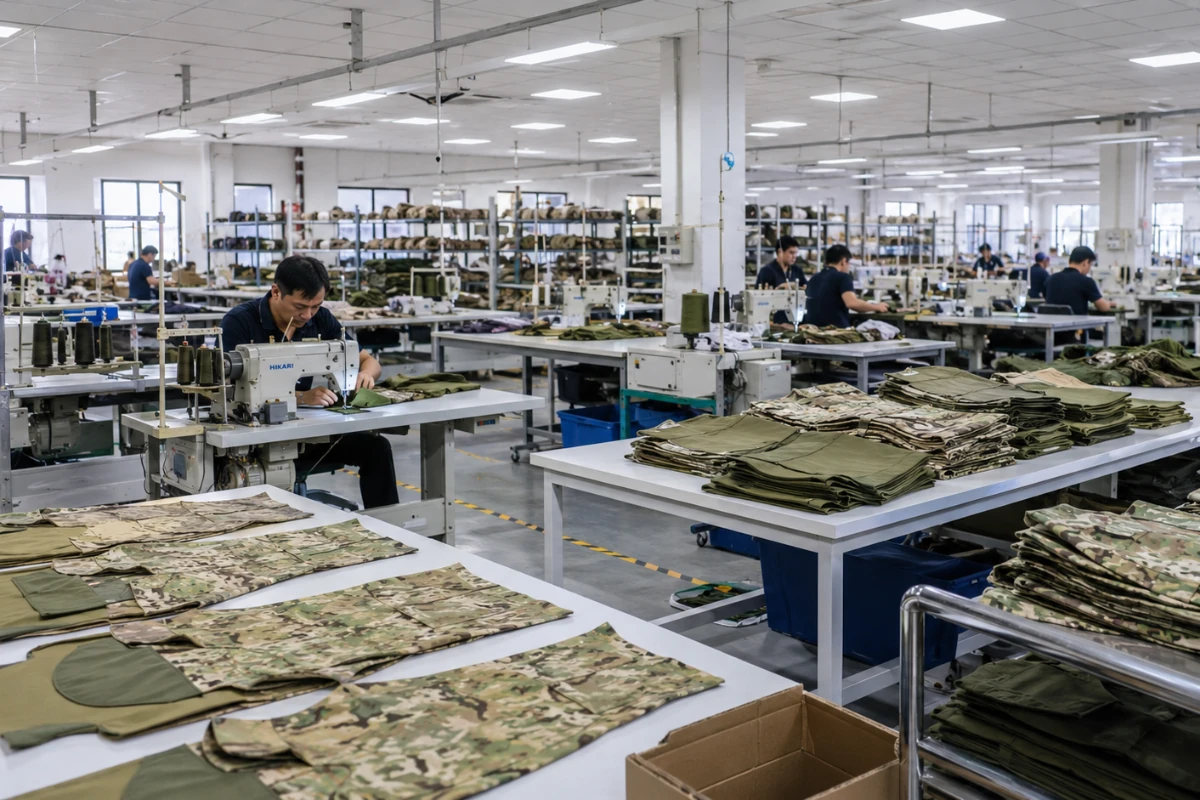
Fronter is part of Wuhan Fardan Industrial Co., Ltd., a manufacturer with over 28 years of experience in military, police, and tactical apparel production since 1998. With a 68,000㎡ smart manufacturing campus, automated production lines, and an annual output exceeding 5 million sets, we have supported government procurement projects in multiple countries including Malawi, South Africa, the UAE, and Brazil.
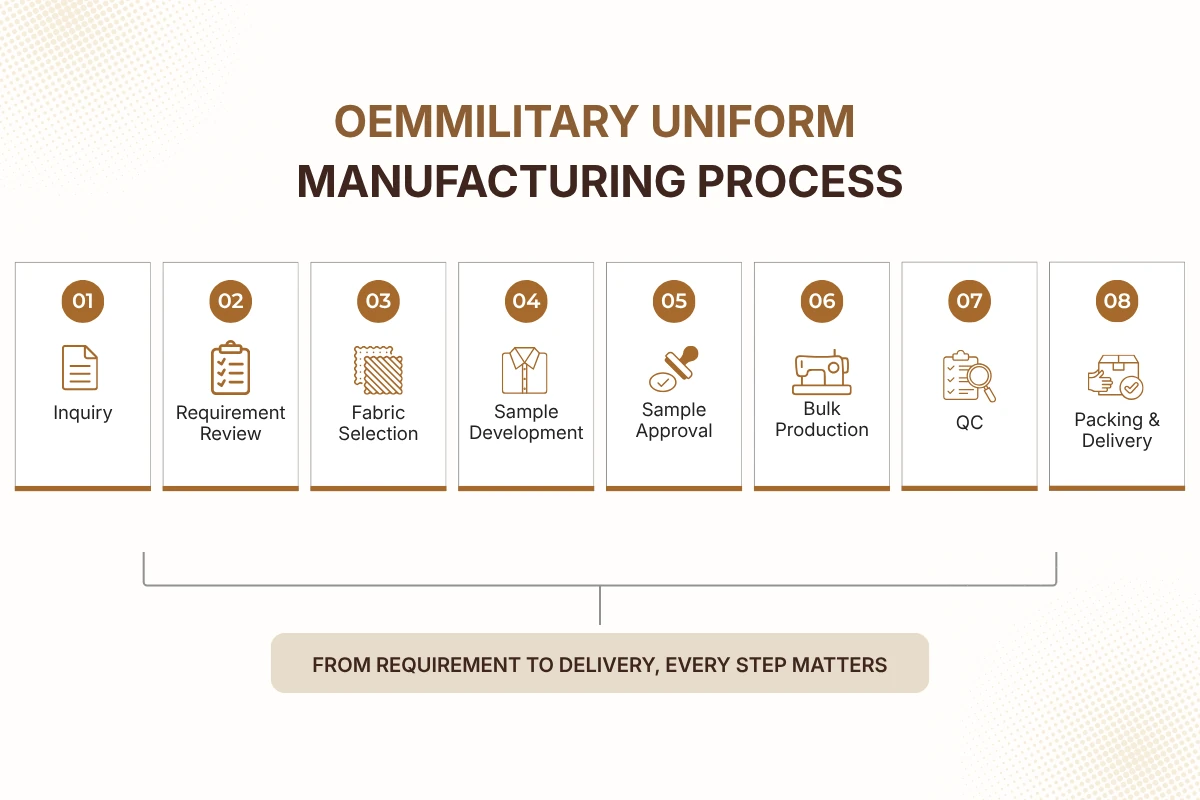
This guide explains how we handle OEM military uniform orders — from the first requirement review through sample development, bulk production, quality control, and export delivery.

Who This Guide Is For
This article is written for B2B buyers planning bulk military, tactical, or security uniform projects. That includes:
- Military uniform distributors and importers
- Tactical apparel brands
Security companies and contractors - Government and institutional procurement teams
- Wholesalers sourcing uniform products for resale
- Buyers planning custom OEM uniform projects
If you are looking for a single-piece purchase or a retail product listing, this guide may not be the right fit. OEM military uniform manufacturing is built for volume, customization, and long-term supply — not one-off orders.
What Does a Military Uniform Manufacturer Actually Do?
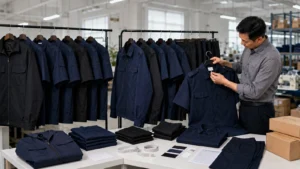
The word “manufacturer” gets used loosely in the apparel industry. Some suppliers are trading companies with no production floor. Others are factories that only handle simple cut-and-sew work. A full-service military uniform manufacturer does something different: they take a buyer’s requirements and manage the production process from start to finish.
That includes fabric sourcing, pattern development, sample making, logo and label customization, bulk production, quality inspection, and export documentation. For B2B buyers with repeat orders or project-based supply needs, this kind of end-to-end support is what makes the difference between a workable supplier and a frustrating one.
Here is a quick comparison to keep in mind:
For buyers who need fabric customization, custom sizing, logo application, or consistent repeat orders — working directly with a military uniform factory is almost always the better path.
Not sure which products fit your project requirements? Request our product catalog to see available styles, fabric options, and customization possibilities before submitting a formal inquiry.
Typical Products Covered by OEM Military Uniform Manufacturing
A capable OEM military uniform manufacturer can usually support a range of uniform and tactical apparel types, depending on buyer requirements and design specs. Common products include:
- ACU uniforms (Army Combat Uniform)
- BDU uniforms (Battle Dress Uniform)
- Combat uniform sets
- Tactical shirts and tactical pants
- Security uniforms and patrol uniforms
- Custom camouflage uniforms
Field jackets, softshell outerwear, and tactical mid-layers
Matching accessories based on project requirements
Product availability and customization options vary depending on fabric, design complexity, quantity, and project requirements. Before assuming a product can be made, buyers should confirm with the manufacturer directly.
Step 1 — Confirming What the Buyer Actually Needs
Before a military uniform manufacturer can quote or plan production, they need to understand the project. This sounds obvious, but it is one of the most skipped steps — and skipping it causes most of the problems that come up later.
A useful requirement review covers:
- Product type: ACU, BDU, security uniform, tactical set, or something else?
- Order quantity: Total pieces and size breakdown
- Destination country: Affects fabric standards, label requirements, and shipping logistics
- Fabric requirement: Material type, weight, performance needs
- Color or camouflage pattern: Pantone reference, existing sample, or standard option?
- Logo, badge, patch, or label requirement: Embroidery, printing, Velcro patch?
- Packaging: Polybag, individual packing, carton marking?
- Target delivery time: Working back from destination to production start
- Sample requirement: Is a pre-production sample needed before bulk?
The more detail you can share upfront, the faster we can come back with an accurate production plan and realistic timeline.
Step 2 — Fabric and Material Selection
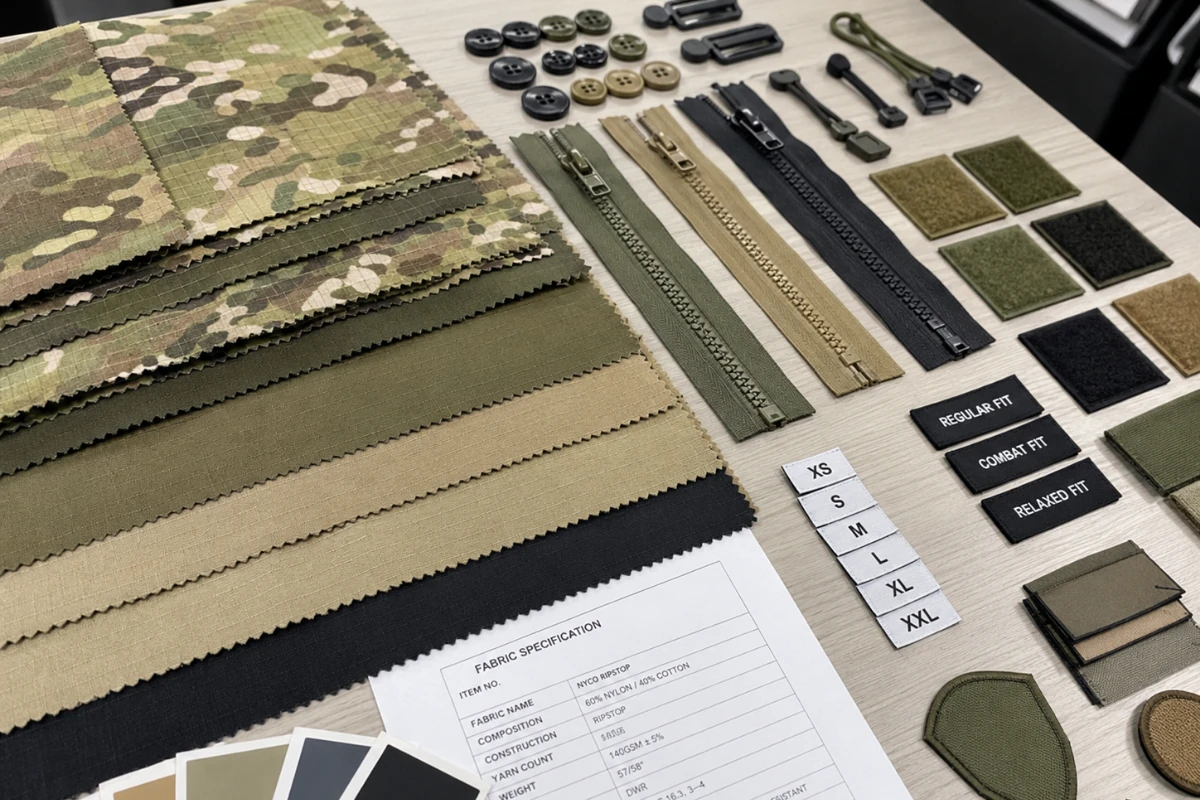
Fabric choice is one of the decisions that most affects the final product — and one that buyers sometimes leave entirely to the factory. That is not always a mistake, but it helps to understand what the main options are and what each one is suited for.
For OEM military uniforms, the most common fabric considerations include:
- Durability and tear resistance
- Breathability and comfort in hot or humid climates
- Color fastness (especially for camouflage patterns)
- Water resistance or quick-dry performance
- Fabric weight and structure (ripstop vs. twill)
- Availability for repeat orders
Here is a breakdown of commonly used fabrics:
Choosing Fabric Based on End Use and Climate
Different deployment environments call for different fabric choices:
- Hot and humid climates: Lightweight, breathable, quick-dry fabrics reduce heat stress and dry faster after rain or heavy activity.
- Dry or desert environments: Durable fabrics with strong color stability hold up better under sun exposure and dusty conditions.
- Field and outdoor use: Tear-resistant construction with reinforced panels extends garment life under rough conditions.
- Repeat supply programs: Consistent fabric availability matters. If a supplier cannot reorder the same fabric lot, color matching on subsequent orders becomes a real problem.
Why Fabric Should Be Confirmed Before Bulk Production
Changing fabric mid-production or after a bulk order is completed is expensive and slow. Confirming fabric before bulk production:
- Avoids surprises in hand feel or appearance
- Locks in color and camouflage effect
- Reduces rejection risk after delivery
- Makes repeat orders more predictable
Step 3 — Pattern Development and Sample Making
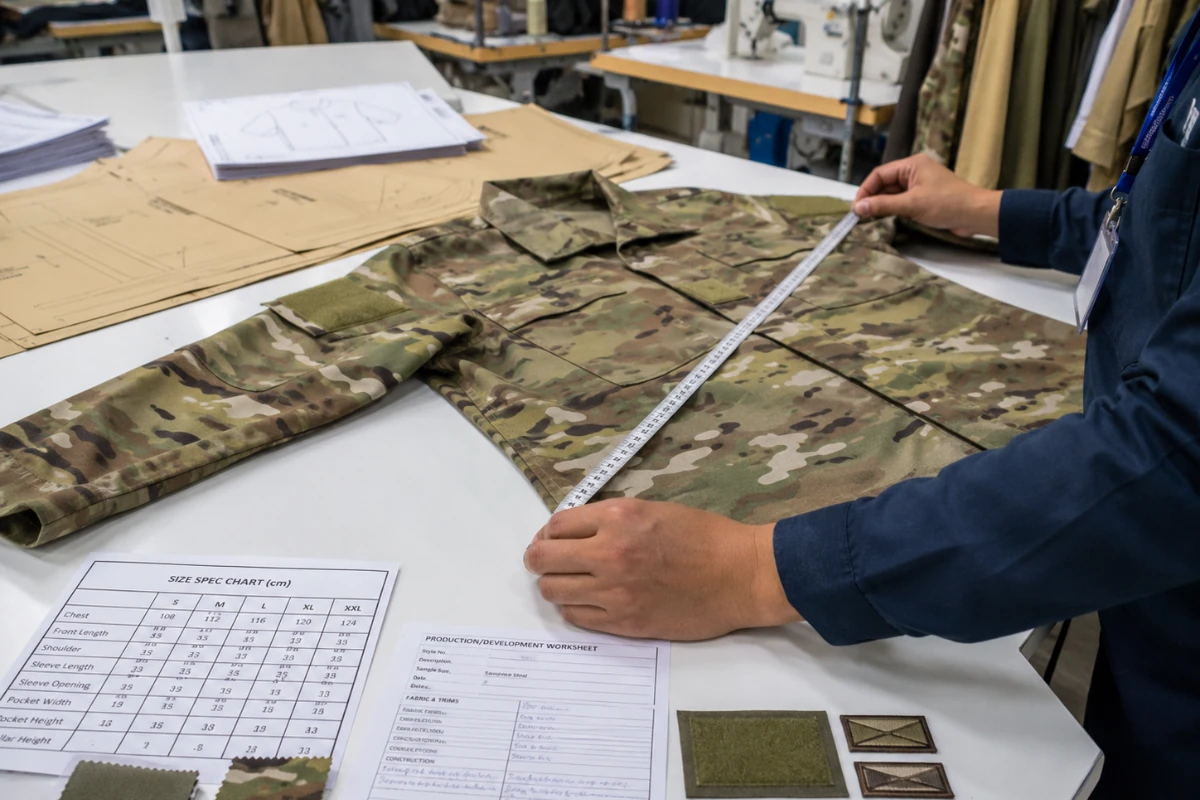
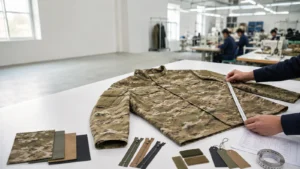
For any custom military uniform OEM order, sampling is the step that turns a spec sheet into something a buyer can actually evaluate. It is not an extra hassle — it is the step that prevents expensive mistakes at the bulk stage.
A pre-production sample allows the buyer to verify:
- Overall design and silhouette
- Size and fit across key measurements
- Fabric hand feel and weight
- Color or camouflage pattern accuracy
- Pocket placement and construction
- Zipper, button, and Velcro quality
- Logo, patch, or embroidery position
- Sewing quality and stitch density
Why Sampling Matters for OEM Military Uniform Orders
Some buyers skip sampling to save time or cost. This sometimes works for simple reorders of products they have already approved. But for new designs, new fabrics, or first-time orders with a manufacturer, sampling is worth the extra lead time. The cost of fixing a problem at the sample stage is a fraction of what it costs to rework or reject a bulk shipment.
Sampling also helps the buyer and the factory align expectations. What looks clear in a sketch or a spec may be interpreted differently by the production team. A physical sample removes most of that ambiguity before money is committed to bulk fabric and production time.
What to Check When Reviewing a Sample
When a sample arrives, buyers should check:
- Size and fit against the approved size chart
- Fabric quality, weight, and hand feel
- Color accuracy compared to the reference
- Stitching quality, including seam strength and consistency
- Logo or patch position relative to the design spec
- Pocket construction and ease of use
- Comfort and range of movement
- Packaging, if that was part of the sample request
Any changes should be clearly documented before approving the sample for bulk production.
Sample Lead Time and Cost
For standard OEM military uniform samples, lead time is typically 2 to 4 weeks depending on design complexity, fabric availability, and customization requirements such as embroidery or custom camouflage printing.
Sample costs are quoted based on the specific product and design. In most cases, sample costs can be credited against the bulk order once production is confirmed. Please contact our team for a sample quotation based on your specific requirements.
Step 4 — Sample Approval and Pre-Production Confirmation
Once the sample is reviewed and any revisions are made, both the buyer and the manufacturer need to lock in all production details before bulk production starts. This confirmation step is where many problems are prevented — and where some are accidentally introduced by rushing.
Key items to confirm before bulk production:
Skipping any of these items tends to generate last-minute delays. Getting everything confirmed in writing before production starts is good practice on both sides.
Step 5 — Bulk Military Uniform Production
Once the sample is approved and production details are confirmed, bulk production begins. For a military uniform factory at Fronter’s scale — with over 5 million sets produced annually across international-standard automated lines — bulk production involves coordinating fabric preparation, cutting, sewing, customization, inline inspection, and finishing across potentially hundreds of thousands of pieces per program.
The typical production sequence looks like this:
- Fabric preparation and incoming inspection
- Cutting based on approved patterns and size breakdown
- Sewing, starting with the main components
- Reinforced stitching where required by design
- Pocket, panel, and patch attachment
- Zipper, button, and Velcro installation
- Logo, label, embroidery, or printing application
- Inline quality checks during production
- Finishing and trimming
- Final inspection before packing
- Packing and preparation for shipment
Cutting and Sewing Consistency
In bulk production, consistency matters more than speed. Accurate cutting ensures size tolerance is maintained across the full order. Stable sewing quality means the finished garments look and perform the same, whether they come from the first production run or the last. Fronter’s smart hanging production system (intelligent吊挂) and MES-integrated workflow help maintain consistent throughput and traceability across large production runs.
Reinforced Construction for Military and Tactical Use
Military and tactical uniforms face harder use than most apparel categories. Good manufacturing reflects that:
- Reinforced stitching at high-stress points (shoulders, pockets, seat seams)
- Strong pocket construction with secure closures
- Elbow, knee, or shoulder reinforcement panels where required
- Velcro and patch panels securely bonded and stitched
- Zipper and button durability appropriate for field use
- Camouflage pattern consistency across all cut pieces
Logo, Patch, and Label Application
Common customization options for OEM military uniforms include:
- Embroidery (for logos, badges, rank marks)
- Screen printing or heat transfer
- Woven labels and size labels
- Velcro patch panels
- Care labels with country of origin
- Custom packaging or barcode labels
Available options depend on design, fabric, order quantity, and buyer requirements. Buyers should confirm what customization is included in the order scope before production starts.
Step 6 — Quality Control Before Shipment
A well-run military uniform manufacturer does not wait until the end of production to check quality. At Fronter, quality control is built into the process at multiple stages — during production and again before shipment — backed by ISO 9001 certified quality management systems.
Inline Inspection
Inline inspection catches problems while production is still running — before all the garments are finished. Common inline checkpoints include:
- Fabric defects in cut pieces
- Sewing consistency and stitch quality
- Measurement accuracy on finished components
- Logo or embroidery position and quality
Final Inspection Before Shipment
Before packing, a final inspection covers:
- Color consistency across all pieces
- Size measurements against the approved size chart
- Stitching strength and finish
- Pocket and closure function
- Velcro, zipper, and button inspection
- Logo, patch, and label position
- Packing quantity and carton marking
Our QC Standard
Fronter’s final inspection follows AQL 2.5 sampling standards across all bulk military uniform orders. Inspection covers size measurements, color consistency, stitching quality, logo and label placement, functional trim testing, and packing quantity verification.
For buyers who require independent verification, third-party inspection by SGS, TÜV, or a buyer-nominated agency can be arranged prior to shipment. We are experienced in coordinating third-party audits as part of government and institutional procurement requirements.
Why QC Matters for Bulk Uniform Buyers
Quality problems that reach the buyer’s warehouse are expensive to fix — not just in cost, but in time, relationship trust, and project delivery risk. For buyers managing institutional or government uniform contracts, delivery failures have real consequences. A manufacturer with a clear QC process reduces that risk significantly.
Good quality control also supports repeat orders. When a buyer knows the second order will match the first in fabric, sizing, and construction, they are more confident placing it.
Step 7 — Packing, Export, and Delivery Support
After the final inspection, the order moves to packing and export preparation. For international B2B buyers, this step is more involved than it might seem.
Packaging Options for OEM Military Uniform Orders
Depending on buyer requirements, packing options may include:
- Individual polybag per piece
- Size and color label on each bag
- Inner carton sorting by size or SKU
- Master carton with carton mark and quantity
- Barcode or SKU label if required by the buyer
- Custom carton marking for project or tender delivery
Export and Logistics Coordination
Fronter can coordinate the full export documentation package, including packing lists, commercial invoices, certificates of origin, and other documents required for customs clearance. For buyers working with government or institutional projects, export documentation may need to meet specific format requirements — which should be discussed with our team in advance.
MOQ, Sampling, and Lead Time: What Buyers Should Know
MOQ, sample availability, and lead time all vary depending on product type, fabric, customization, and order quantity. Here is a general reference for planning purposes:
For buyers who need faster supply or are testing a product before committing to a custom order, ready stock options can be a practical starting point. For buyers with specific fabric, color, logo, or construction requirements, a full OEM order is the right path — and sampling should be part of that process.
Lead time depends on fabric availability, order quantity, customization complexity, and how quickly the pre-production confirmation can be finalized. With an annual output of over 5 million sets and digitalized production management, Fronter can handle both urgent programs and long-cycle institutional supply contracts.
For Government and Institutional Procurement Buyers
If you are managing a government tender, military supply contract, or institutional uniform procurement program, there are several additional requirements that a manufacturer should be able to support. Here is what Fronter can provide for project-based procurement:
Procurement teams are welcome to share tender specifications or technical requirement documents directly. Our team will review and provide a formal response on production feasibility, timeline, and pricing.
How to Choose the Right Military Uniform Manufacturer
With a lot of options in the market, the question of how to evaluate a custom military uniform manufacturer matters. Here is a practical checklist:
A manufacturer who asks good questions before quoting is usually a better long-term partner than one who sends a price list without understanding the project. Good questions mean they understand what can go wrong — and are trying to prevent it.
How Fronter Supports OEM Military Uniform Buyers
Fronter is the export brand of Wuhan Fardan Industrial Co., Ltd., founded in 1998. With 28 years of focused experience in military, police, and tactical apparel manufacturing, we have built a production infrastructure designed for large-scale, project-based uniform supply.
Our manufacturing base:
- 68,000㎡ smart industrial campus in Wuhan, China
- International-standard automated production lines
- Annual output exceeding 5 million sets
- Smart systems including GST, WMS, MES, and intelligent hanging production management
- Full digitalization of production workflow, quality data, and inventory management
Certifications: SGS | ISO 9001 | TÜV | BSCI
Government procurement experience:
We have participated in government uniform procurement projects across multiple countries, including Malawi, South Africa, the United Arab Emirates, and Brazil. Our team understands the documentation, specification alignment, and delivery coordination that institutional projects require.
What we support:
- OEM and ODM military uniform and tactical apparel production
- Full customization: fabric, color, trim, construction, logo, label, and packaging
- Sample development before bulk production
- Bulk production with inline and final quality control (AQL 2.5)
- Third-party inspection (SGS, TÜV, or buyer-nominated) available upon request
- Export documentation and logistics coordination
- Program-based supply support for repeat and phased delivery orders
If you are sourcing for a government project, institutional tender, or ongoing supply program, contact our team with your specification requirements. We can support technical spec sheets, compliance documentation, and phased delivery schedules based on project needs.
FAQ: Military Uniform Manufacturing
Q1: How do I choose a military uniform manufacturer?
A : Look for a manufacturer that supports OEM customization, sample development, fabric selection, bulk production, quality control, and export coordination. Certifications such as ISO 9001, SGS, and BSCI are a reliable indicator of production standards. For B2B buyers, consistent communication and repeat-order capability are also important factors.
Q2: Can a military uniform manufacturer support OEM customization?
A: Yes. A capable military uniform manufacturer can support fabric selection, size adjustment, color and camouflage customization, logo application, label customization, packaging, and bulk production — depending on project requirements. Fronter has been delivering OEM military and tactical uniform programs since 1998.
Q3: What information should I provide when requesting a military uniform quotation?
A: Product type, quantity, destination country, size breakdown, fabric requirement, logo or customization details, packaging needs, and target delivery timeline. For government or institutional projects, a specification document or tender brief is also helpful.
Q4: Do I need a sample before bulk military uniform production?
A: For custom OEM orders, a sample is strongly recommended before bulk production. It confirms fabric, sizing, construction, color, logo position, and overall quality — and reduces the risk of problems in the bulk shipment. At Fronter, standard sample lead time is 2 to 4 weeks depending on design complexity.
Q5: What fabrics are commonly used for military uniforms?
A: TC ripstop, TC twill, and polyester-cotton blends are the most common. The right choice depends on climate, end use, comfort requirements, and budget. Our team can recommend options based on your specific deployment environment and project requirements.
Q6: What is the difference between a military uniform manufacturer and a supplier?
A: A manufacturer handles production directly, including customization and bulk order control. A supplier may provide available products or coordinate sourcing without owning production. For OEM projects, direct manufacturing support gives buyers more control over fabric, construction, and quality.
Q7: Can military uniforms be customized with logo, patch, or label?
A: Yes. Depending on design and quantity, options typically include embroidery, printing, woven labels, Velcro patches, size and care labels, and customized packaging.
Q8: How does quality control work for bulk military uniform orders?
A: Fronter’s QC process includes fabric inspection at intake, inline checks during sewing, and a final inspection before packing following AQL 2.5 sampling standards. Inspection covers size measurements, color consistency, stitching quality, logo position, functional trim inspection, and packing quantity. Third-party inspection by SGS, TÜV, or buyer-nominated agencies can be arranged upon request.
Q9: Can Fronter support government procurement or institutional tender projects?
A: Yes. We have direct experience with government uniform procurement in Malawi, South Africa, the UAE, Brazil, and other markets. We can provide product specification sheets, compliance documentation (ISO 9001, SGS, TÜV, BSCI), third-party inspection coordination, and phased delivery schedules. Procurement teams are welcome to share tender documents for a formal feasibility review.
Ready to Start an OEM Military Uniform Project?
Share your product type, quantity, destination country, size breakdown, fabric requirement, and logo details with Fronter. Our team — backed by 28 years of military and tactical apparel manufacturing experience — can help you evaluate the right production solution from sample development to bulk delivery.