How Military Uniform Manufacturers Adapt to Global Trade Changes
Global trade is changing faster than ever. Rising transportation costs, unstable supply chains, and shifting sourcing conditions have become part of daily operations for many industries. For buyers and brands working with military uniform manufacturers, these changes are no longer temporary challenges—they are long-term realities that require better planning and stronger manufacturing partnerships.
Today, sourcing military uniforms is not just about finding the lowest price. It is about stability, reliability, and the ability to adapt. In this article, we explore how global trade changes are reshaping sourcing decisions and why experienced military uniform manufacturers play a more important role than ever in OEM planning.
Why Global Trade Changes Matter to Military Uniform Manufacturers
In the past, global trade followed relatively predictable patterns. Lead times were stable, material costs were easier to control, and logistics routes were reliable. Today, that environment has changed.
For military uniform manufacturers, global trade changes directly affect:
- Fabric availability and pricing
- Shipping schedules and delivery timelines
- Export documentation and compliance requirements
- Cost control for long-term OEM projects
Because military and tactical uniforms are often produced in large quantities and delivered on strict schedules, even small disruptions can cause serious delays. This is why manufacturers must rethink how they approach sourcing and OEM planning—not simply reacting to problems, but preparing for them in advance.
Key Global Trade Challenges Affecting Military Uniform Sourcing
Material Availability and Fabric Sourcing
Many military uniforms rely on specialized fabrics such as ripstop, nylon-cotton blends, or camouflage textiles. Changes in global trade can affect how quickly these materials are sourced and how stable their pricing remains.
Reliable military uniform manufacturers usually maintain long-term relationships with fabric suppliers and keep multiple sourcing options available. This approach helps reduce shortages and ensures consistent quality across production batches.
Shipping Delays and Lead Time Uncertainty
Transportation delays have become one of the most common challenges in global sourcing. Longer transit times, port congestion, and rising freight costs all affect delivery schedules.
For buyers, working with manufacturers who understand lead-time management—and who can plan production accordingly—is essential. This is where structured OEM planning becomes a real advantage rather than a simple production step.
Export Compliance and Documentation
Military uniforms are often shipped to different regions, each with its own import standards and documentation requirements. Errors in labeling, packing lists, or certificates can result in costly delays.
Experienced military uniform manufacturers are familiar with export procedures and help buyers avoid these issues by managing documentation accurately and consistently.
How Global Trade Changes Reshape OEM Planning Strategies
As global trade becomes less predictable, short-term purchasing decisions are no longer enough. OEM planning now requires a long-term mindset.
From One-Time Orders to Long-Term Planning
Instead of placing isolated orders, many buyers now work with manufacturers on longer OEM programs. This allows both sides to forecast demand, reserve production capacity, and plan materials in advance.
At WHFronter, we have seen firsthand how long-term OEM planning helps buyers reduce uncertainty and maintain stable supply—even when external trade conditions change.
Flexible Production and Batch Planning
Flexible production planning allows manufacturers to adjust batch sizes, timelines, and material usage when needed. This flexibility helps reduce risk when shipping delays or material shortages occur.
Well-established military uniform manufacturers are better equipped to balance efficiency with adaptability—something less experienced factories often struggle to achieve.
Fabric Pre-Booking and Modular Design
Another effective strategy is fabric pre-booking, where key materials are secured ahead of production. Modular design—using the same base pattern with different fabrics or finishes—also allows faster adjustments without restarting the design process.
Quick Insight:
Long-term OEM planning helps military uniform buyers reduce cost fluctuations, stabilize lead times, and avoid unexpected supply interruptions—especially in uncertain trade environments.
The Growing Role of Experienced Military Uniform Manufacturers
Not all manufacturers are equally prepared to handle global trade challenges. Experience plays a critical role.
Established military uniform manufacturers bring several important advantages:
- Stable sourcing networks
- Long-term fabric supplier relationships
- Proven quality control systems
- The ability to manage complex OEM requirements
For buyers, this means fewer surprises, more predictable timelines, and better coordination throughout the production process.
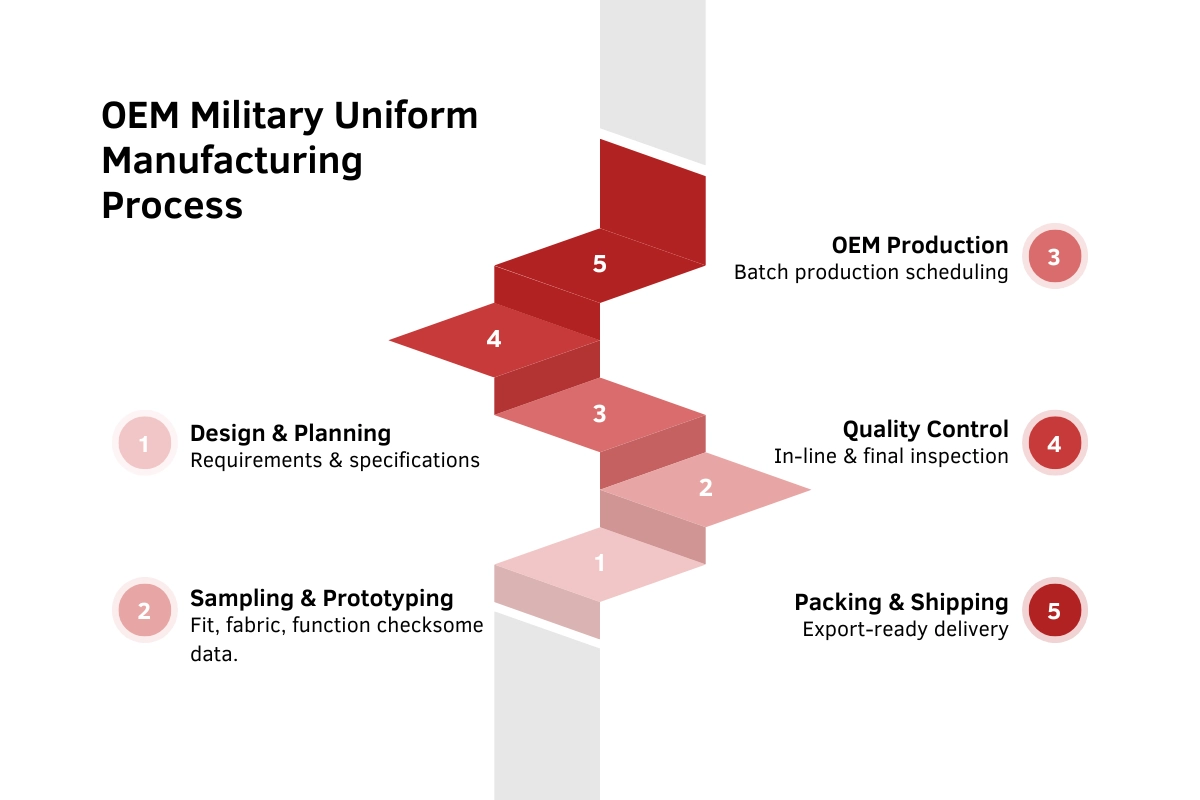
How Military Uniform Manufacturers Support Global Buyers Under Changing Trade Conditions
Supporting Different Operating Environments
Military uniforms are used in a wide range of environments—from hot and humid climates to cold and mixed terrain conditions. Manufacturers must understand how fabric choice, stitching, and construction affect real-world performance.
Experienced manufacturers guide buyers in selecting the right materials based on actual usage conditions, not just technical specifications.
Serving Multiple Export Regions
Many buyers source military uniforms for more than one region at the same time. Each destination may have different requirements related to sizing, labeling, or packaging.
Professional military uniform manufacturers are familiar with these differences and can adapt production details accordingly, ensuring smoother delivery across multiple export destinations.
Clear Communication and Production Transparency
Clear communication is often overlooked but remains critical in OEM cooperation. Manufacturers who provide regular updates, production photos, and clear timelines help buyers plan with confidence.
Transparency builds trust—especially when trade conditions are uncertain and adjustments may be needed.
Why OEM Planning and Manufacturer Selection Go Hand in Hand
OEM planning and manufacturer selection cannot be separated. Even the best sourcing strategy will fail without a capable manufacturing partner.
Choosing the right military uniform manufacturer means working with a factory that understands sourcing risks, adapts to trade changes, and supports long-term planning. Manufacturer capability directly affects cost control, delivery reliability, and product consistency.
This is why experienced buyers look beyond price and focus on flexibility, communication, and proven OEM performance.
Planning Ahead in a Changing Global Trade Environment
Global trade changes are no longer short-term disruptions—they are part of the new normal. For brands and buyers sourcing military uniforms, success now depends on planning ahead and working with the right partners.
Strong OEM planning, combined with experienced military uniform manufacturers, helps reduce risk, improve stability, and ensure consistent supply—even in uncertain conditions.
If you are looking for a manufacturing partner who understands global sourcing challenges and supports long-term OEM planning, WHFronter is ready to help.
Contact WHFronter to discuss OEM planning, fabric sourcing options, and production timelines for your military uniform projects.
Related Topics:
Global Sourcing Strategy Military Uniform Manufacturers Military Uniform OEM OEM Manufacturing OEM Planning Supply Chain Management Uniform Production Process